
Feds to double Canada’s electricity grid capacity
A focus on transmission and materials could complement existing investments

Prime Minister Carney said earlier this month that his government will unveil a new electricity strategy aimed at doubling Canada’s grid capacity, modernizing the infrastructure, and delivering more efficient, reliable and affordable electricity.
His announcement was part of a broader electric vehicle speech on February 5th. Carney provided no further details but said the strategy would be released in the coming weeks. Consultations on scope, policy, and budget measures would likely follow this year.
Provinces are responsible for their own electricity systems but there is a lot of room for the feds to have a big impact. The federal government already offers tax credits for investments in renewable energy, carbon capture and storage, and related manufacturing. Carney has signed an MOU with Alberta to boost low-carbon power generation, and has designated Nova Scotia’s 5 GW Wind West offshore wind strategy and Ontario’s first small module reactor (SMR) as priorities with his Major Projects Office, including $2 billion in funding for the SMR.

Altogether, Canada’s 10 provinces have announced plans to increase electricity generation by at least 72% by 2050. This is likely a low forecast as not all the provinces have released long-term plans (e.g., Saskatchewan and Nova Scotia), some are notoriously understated (e.g., Ontario), and all existing plans except Manitoba’s were prepared before our economic “rupture” with the U.S.
Given provincial plans and existing federal support, electricity generation growth is likely in-hand. Carney’s electricity strategy should also provide much needed support for transmission and electricity system materials. There are opportunities enough for the next 15 years with potential economic gains for decades.
Transmission – intra-provincial
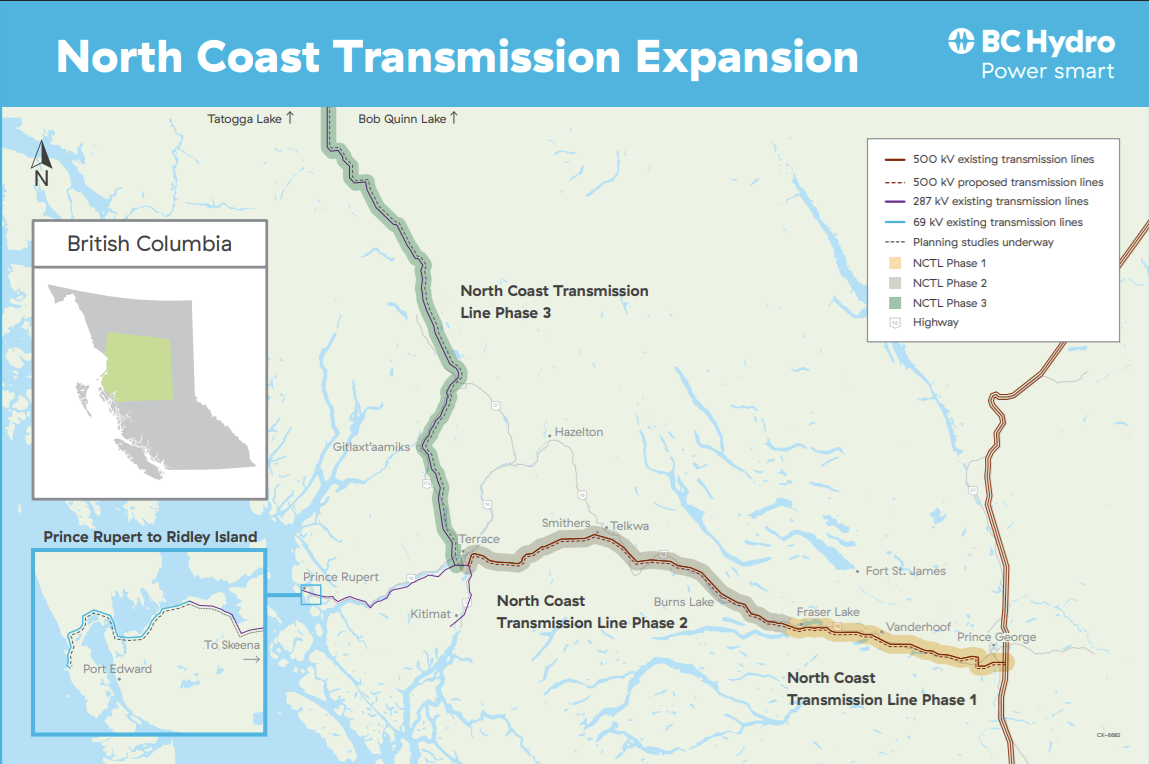
Carney’s government has referred all three phases of British Columbia’s North Coast Transmission Line to the Major Projects Office for fast-tracking. B.C.’s new 500-kilovolt line will follow the path of existing transmission, west from Prince George to Terrace, then north to anticipated industrial and mining demand near Bob Quinn Lake. The project would also upgrade existing lines to carry additional power.
The feds should do the same in other provinces. Ontario recently advanced the first phase of what could be a major northern transmission line and roads project up to a key mining region in its northeast. The approved Greenstone Transmission Line doesn’t likely need fed intervention but the next project phases are much riskier and would benefit from federal support.
Similarly, SaskPower is undertaking reinforcement work on transmission lines southeast of Regina to connect with electricity markets in the U.S. It does not appear to have plans for needed upgrades to lines in its southwest that would unlock wind energy potential and enable future interties with Alberta. The federal government could help limit the impact to Saskatchewan ratepayers of these upgrades.
Transmission – inter-provincial
In its MOU with Alberta, the federal government listed “construction of large transmission interties with British Columbia and Saskatchewan” as one of four projects covered by the tentative agreement. This is an area where federal involvement and financing could see significant returns.
Expansion of existing interties between B.C., Alberta, Saskatchewan and Manitoba would provide much needed resilience in the region, especially if paired with nuclear and renewable energy and long-duration energy storage.
The same would be true of boosting existing inter-tie capacity between Newfoundland & Labrador, Nova Scotia, and New Brunswick. NL and Nova Scotia’s significant offshore wind potential and NL’s hydro capacity could help resolve resource adequacy issues in the Maritimes and could provide Atlantic Canada with an alternative route to the U.S. market for sales of surplus clean electricity.
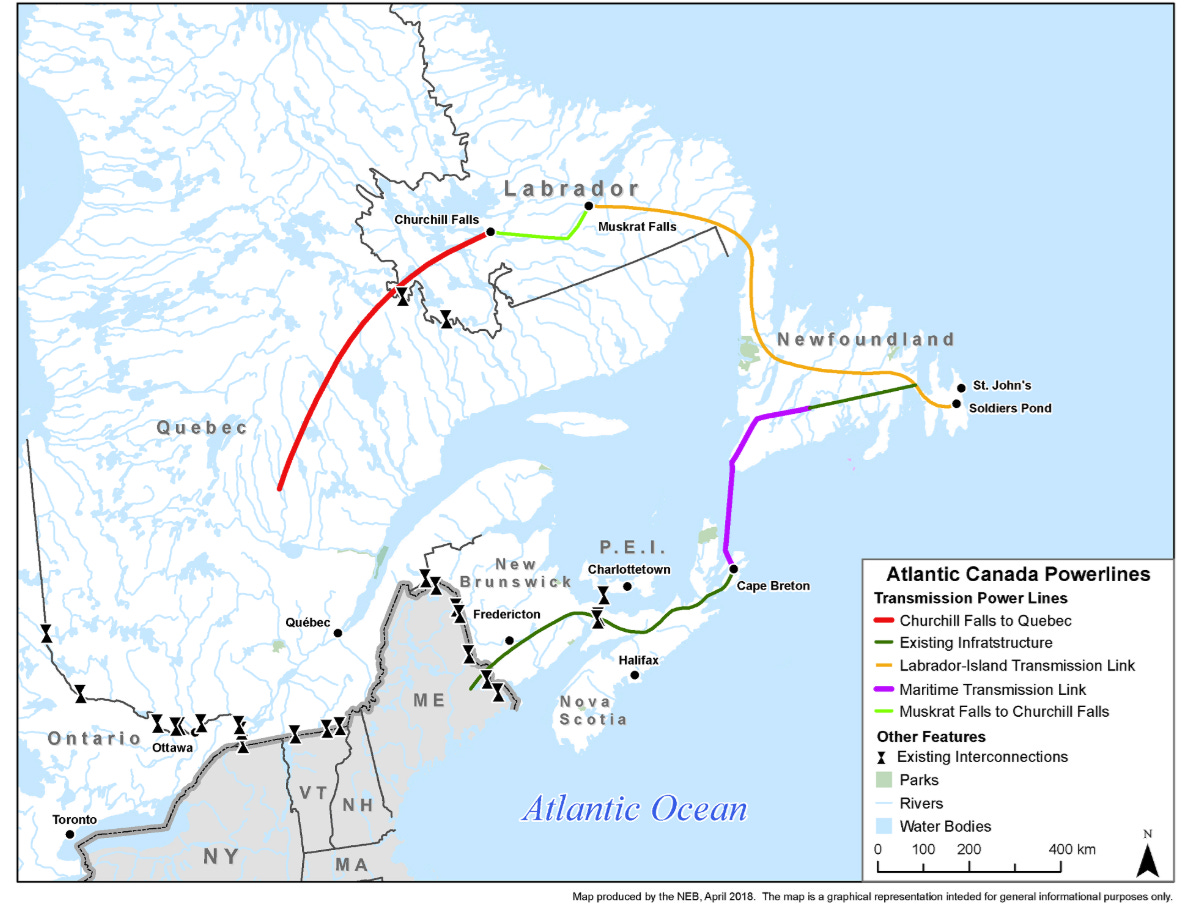
The Atlantic and Prairie provinces have too small a ratepayer base to take on the risk of major intertie transmission lines, much less shoulder the upfront costs. The lines would ultimately be moneymakers, so financing via the federal government could make sense for Canadians.
Electricity materials
Transmission support is reasonably certain to be included in Carney’s electricity strategy in some form. Less certain is support for key materials needed by Canada’s electricity grid. Carney’s Defence Strategy issued this week committed to “bring forward plans” for expanding production and processing of critical minerals but the electricity strategy could reinforce the plan.
Specifically, Alberta, Saskatchewan, Ontario and New Brunswick are all going to rely on SMRs, which require enriched uranium (up to 20%) that Canada does not produce and currently plans to procure from the U.S. It is likely in our economic and security interests to enrich domestically the high-grade uranium mined in Saskatchewan for use in Canada and for export. Building uranium enrichment facilities is an expensive undertaking and no province is likely to do so on their own.
Similarly, Canada is home to potentially significant lithium deposits, along with cobalt, fluorspar, and other minerals used in lithium-ion battery production. Federal support for minerals processing within Canada could help B.C., Manitoba, Nova Scotia and Quebec backstop their renewable energy development plans and manage peak demand, particularly in drought years with poor hydro electricity generation.