
Quebec says Churchill Falls deal must not fail
Newfoundland says it won’t be fooled again, as deadline looms

Quebec’s new Energy Minister said last week that its proposed Churchill Falls hydropower deal with Newfoundland & Labrador “must not fall through” and it is easy to see why the province needs the deal to close. Hydro-Quebec relies on Churchill Falls for about 15% of its power, it must start making deliveries under two major electricity export contracts this year and its hydropower reserves have dwindled after consecutive dry years.
Quebec might not find an overly sympathetic partner in NL, which is not generally as keen on the proposed agreement. A key member of NL’s three-person panel reviewing the deal, Michael Wilson, has called it “an outright betrayal of the people of this province and all future generations.”
Most inter-provincial electricity deals barely muster the interest of the staff drafting the agreements, much less of the general population, but the Churchill Falls power agreement between Quebec and NL has a deep and bitter history. A history NL is wary of repeating.
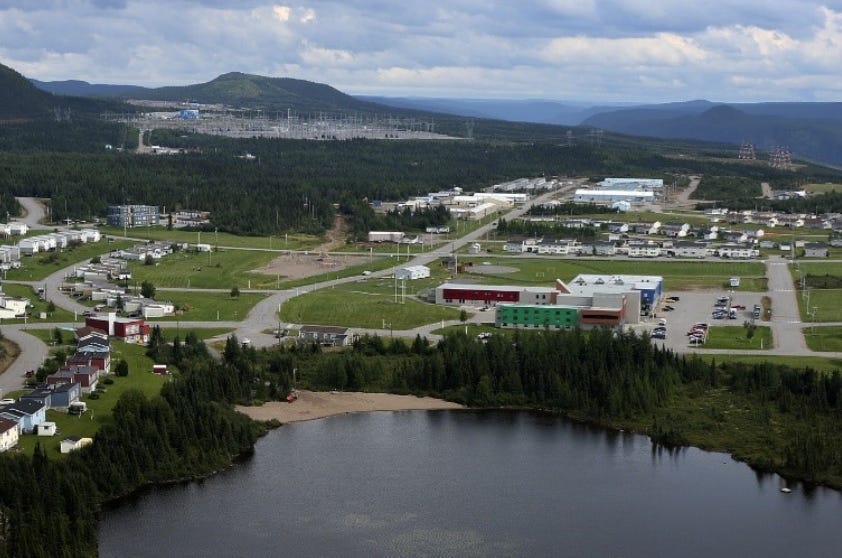
The original Churchill Falls agreement was signed in 1969, when NL was a small, relatively new Canadian province with few options to make use of its massive hydroelectric potential or to raise the money needed to build the projects. Backed into this corner, it agreed to sell Hydro-Quebec 90% of the power produced at the massive Churchill Falls hydro station at the rock bottom price of $2.20/MWh for 72 years.
It was a great deal for Quebec as $2/MWh was cheaper than any alternative source of electricity in 1969. Over the next 55 years, the price became absurdly cheap compared to market prices. Hydro-Quebec said in its update on the first nine months of 2025 that it had exported power for an average $150/MWh. It earned $2.9 billion on exports in 2022 alone when wholesale electricity rates spiked.
NL saw none of that increased revenue and continued to receive its $2/MWh. Hydro-Quebec also took at 34.2% stake in Churchill Falls under the original deal, further limiting NL’s gains. Newfoundlanders have watched their neighbours rake in the revenue on the back of nearly free NL hydropower.
Hydro-Quebec allies have argued the deal was positive for NL as it made money it wouldn’t have otherwise made. It’s also true that Hydro-Quebec had all the power in the 1969 negotiation and made the most of it.
That’s how it goes in the big leagues. But, ultimately, it was a terrible deal for Newfoundlanders.
This brings us to today. The original deal doesn’t expire until 2041 but development timelines for hydropower are 10-15 years and can be longer for nuclear, which would be Hydro-Quebec’s best options for replacing Churchill Falls. It is under pressure to get this done or to prepare to build in Quebec.
The new deal was tentatively structured in December 2024 under an MOU supported by Quebec and NL premiers no longer in power. It would see Hydro-Quebec continue to purchase 90% of power from the existing Churchill Falls project and 1,600 MWs in upgrades and expansions. It would also see Hydro-Quebec purchase nearly all of the power produced at a new 2,250 MW hydro project at Gull Island, in which it would take a 40% stake.
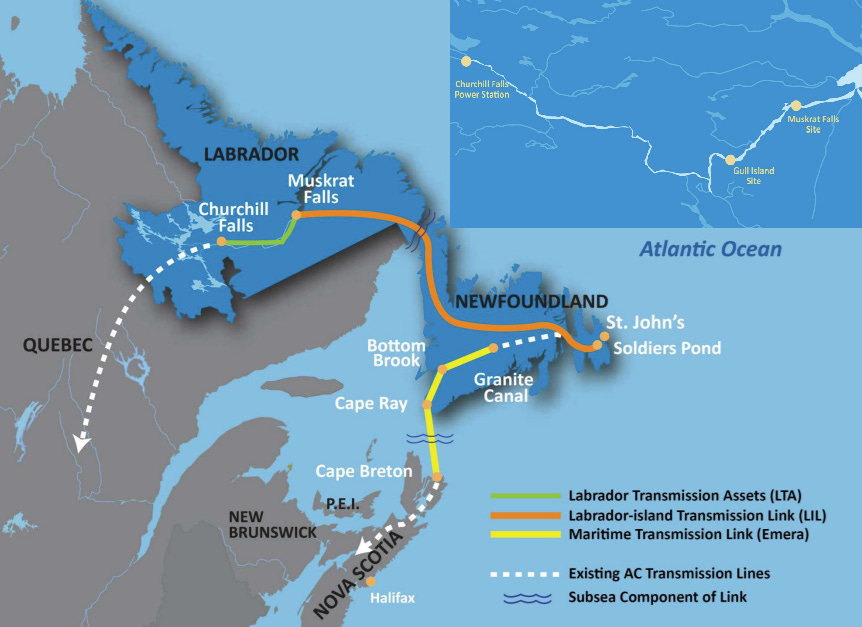
In short, Hydro-Quebec would continue to own 34% of Churchill Falls and a 40% stake in Gull Island. It would sell itself nearly all of the power from both projects at a pre-determined rate for 50 years. Sound familiar?
The MOU suggests no price escalators or milestones that would trigger rate increases or reviews. It seemingly includes no mechanism to enable NL to benefit from anticipated market rate increases due to AI data centres, electrification initiatives, and new industrial and mining projects, among other upward pressures.
So, why would NL sign this deal after decades of economic heartache?
The biggest change proponents highlight is the average rate increase from $2/MWh to $59/MWh. This is many times higher, so it must be good, is the argument. Some, including Wilson, have argued the accounting is faulty and that the average rate under the deal would be much less.
Assuming Hydro-Quebec is absolutely correct in its calculation of the average rate, this deal would offer NL an average rate that:
is roughly a third of what Hydro-Quebec earned on its own wholesale deals last year,
Hydro-Quebec described as “half the price of the renewable alternatives available to Quebec,”
is the same as the global average levelized cost of new hydro ($57/MWh) in 2024, meaning NL would be selling the power at 2024 cost over 50 years, and
includes no mechanism to alter the rate upward when market prices or operational costs climb.
If this deal isn’t a repeat of 1969 it has a fairly distinct rhyme. The MOU doesn’t include an automatic renewal, which is positive. However, earlier stages of the 1969 deal’s negotiation hadn’t included one either.
NL’s panel, formed by Premier Wakeham in December 2025, is reviewing the proposed deal and collecting feedback from the public until March 1. Crown corporation NL Hydro will presumably continue negotiations with Hydro-Quebec based on the panel’s findings.
Quebec’s current government is hoping to close the deal as soon as possible as it is heading for a provincial election by October and is not currently positioned to win. The Parti Quebecois is leading in the polls and has called the proposed MOU an embarrassment, though it’s unclear what it would prefer to buying massive amounts of power at cost for 50 years.
Hydro-Quebec is still a power giant, holding export relationships, favourable capital cost options, and largely controlling NL’s physical access to Ontario and the U.S. markets. At the same time, NL has completed the Maritime Link power connection to Nova Scotia, New Brunswick and Maine, it has its own mining and other industrial sectors to power, and it doesn’t need the power as badly as Hydro-Quebec to meet existing commitments.
The provinces intended that a final deal, built on the MOU, would be signed by April 1st of this year but the timeline seems unlikely now. All eyes are on NL’s review panel to gauge how challenging a deal this will be to complete.