
Alberta looking to cash in on AI boom
The province is elbowing its way to the centre of Canada’s AI sector

Chasing AI data centre investment is proving to be a questionable objective.
PJM, America’s largest electricity market, generates more electricity than all of Canada’s grids combined and has gigawatts of new power generation waiting to supply its system. Its size and experience did not protect it. PJM has spent over $47 billion filling capacity gaps created by new data centre demand and expects to be gigawatts short of meeting its needs in 2027. Translation: AI data centres have caused electricity rates to spike and ratepayers could still face blackouts.
Nevertheless, Alberta is betting big that its future lies at the heart of Canada’s AI sector, if it can just get the rules right. It is moving fast, temporarily capping data centre connections, passing new taxes, and making progress on policies and technical rules. All while Canada’s other big grids – Quebec, Ontario, and British Columbia – have taken only early steps to prepare for the onslaught.
It may be that other provinces aren’t as keen on AI data centres, which are insatiable power consumers. A ChatGPT query requires 10 times the power of a google search and electricity needs are expected to increase. The data centres typically consume a lot of water for cooling their servers, employ very few people, and have been non-committal on data sovereignty, i.e., keeping Canadian data in Canada.
Some provinces are cautiously considering these questions but Alberta is all in.

Attacking near-term barriers
Alberta’s biggest challenge in locking down AI data centre investment may be that its grid is dirty. Alberta has no hydro or nuclear power today. The province said it plans to build nuclear but that will take 15+ years to site, permit, and build. So, its $100 billion AI dream will need to rely on gas for the foreseeable future. This is a problem for two reasons:
1. Canada’s federal Clean Electricity Regulation (CER) will impose strict limits on electricity generation emissions in 2035. This would make powering AI data centres extremely difficult in Alberta as carbon capture and storage (CCS) at natural gas plants is prohibitively expensive. (Experienced generator Capital Power cancelled a $2.4 billion CCS project in 2024 for this reason.)
2. Young people use AI and young people like the idea of breathing outside for their entire lives. So, AI companies tend to prefer emission-free power sources.
Addressing Issue #1
Alberta is banking so heavily on AI for its economic future that it spent half of its considerable political capital with the Federal Government last year clearing this roadblock. Alberta signed a partnership MOU with the Feds in which AI was the major focus, only sharing the spotlight with oil pipelines.
Under the MOU, the Feds exempted Alberta from the CER insofar as Alberta adopts a $130/tonne effective carbon price. For context, Canada’s government had previously found that a $170/tonne carbon price wouldn’t be enough to incentivize investment in cleaner energy sources. And, the way Alberta’s carbon pricing program (TIER) works, the real carbon price will likely be much lower.
The Feds effectively absolved the province of meaningful electricity emissions accountability under the MOU. Alberta solved its CER problem.
Addressing Issue #2
The province must make itself so attractive to AI companies that they’re willing to take a chance on their young users’ interest in emissions. On this point, Alberta is working hard to speak the universal love language of business – certainty.
Alberta shooting its shot
The province is nearing publication of final technical rules for grid connection. Data centres are weird loads and their unique power consumption behaviour can cause major reliability issues even where there is enough power. These new rules will establish predictable standards for AI companies.
Alberta’s market operator (AESO) is also developing processes this year for forecasting demand, allocating grid access, and determining transmission costs and daily rates. The new regulations would provide investment certainty for AI companies and would flesh out legislation passed in December.
One such piece of legislation provided fast-track approvals for AI data centres that bring their own power. In other words, if an AI company wants to build a data centre in Alberta, they would find a power producer to build a new generation plant and buy its power. These projects would get priority approvals and grid connections, possibly with additional benefits if they provide excess power to the grid.
If that carrot doesn’t work, Alberta also passed a stick. Data centres planning to connect to the grid will pay a new levy based on the value and age of their computer equipment and their power demands. Data centres that rely exclusively on their own generation will pay a smaller tax.
Maintaining public support
Alberta is not afraid to grind the wheels of progress to an absolute halt to keep voters on board when it needs time to think. It once paused renewable energy development for months and has now prohibited new AI data center connections until 2028.
It allowed two of the most advanced projects to squeeze in before the pause, including a Pembina Pipeline and Keneticor partnership, which purchased 970 MWs to power an unnamed customer while they build it a new gas plant. Gas generator TransAlta acquired the remaining 230 MW for a customer it had not signed as of May.
The remaining 20 GW of known data centre demand will wait to compete for grid access under the new rules. This pause could help protect ratepayers from a PJM-like mess and keep voters on board with Alberta’s push for national AI dominance.
Competition nipping at Alberta’s heels
Premier Smith directed Alberta’s Utilities Minister in October to develop a nuclear roadmap and regulatory framework to advance projects “as soon as possible” which could help cement Alberta’s lead position on AI. Provinces with cleaner grids could sneak in before then but they don’t appear to be in any kind of hurry.
Ontario and Quebec are currently home to most traditional data centres in Canada. The provinces boast large, clean grids and bountiful water resources. Both have passed legislation requiring economic benefit reviews under parameters that would affect all AI data centres. However, neither has taken steps toward adopting rules to enable development, so it is unclear how committed they are to the AI boom.
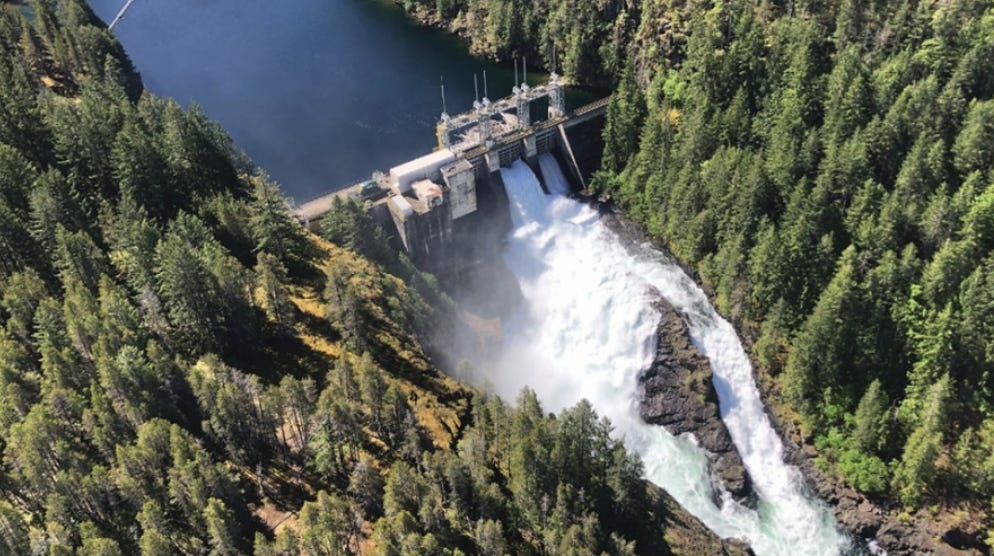
British Columbia may pass on the whole thing. It capped electricity allocations for new data centres and said it is only interested in power consumers that serve the BC economy. It hasn’t proposed an economic benefit test but its earlier actions may be informative. The province passed legislation permanently banning new connections for cryptocurrency mining, citing “its disproportionate energy consumption and limited economic benefit.” It may be that AI data centres will share the same fate on Canada’s west coast.