
Nuclear sector fairytales getting out of hand
Canada deserves a nuclear strategy based in reality

Canada’s nuclear strategy has set ambitious ten year-targets based on an idealized understanding of the nation’s experience. A bonanza in nuclear spending without a brutally honest assessment of project history and current capabilities could set the country up for failure.
The strategy released in June would see two new large reactors under-construction or in-operation by 2035 with eight more under-development by 2040, representing tens of billions in development. Canada plans to sell its CANDU reactor into four new international markets by 2040 and to spend hundreds of millions in new research to push a demonstration micro-generator into operation by 2035. (Challenges related to these goals will be featured in future posts.)
Canada is making a big economic bet on nuclear technology without any discernable evidence it is the country’s best option, domestically or for export. Ontarians are used to this approach from the Ford government, which consistently over-states nuclear efficiency, exaggerates land savings, and down-plays costs. Ontario’s government owns most of the province’s nukes.
The Feds’ bandwagon jumping risks Canada misplaying its nuclear hand and missing out on other opportunities.
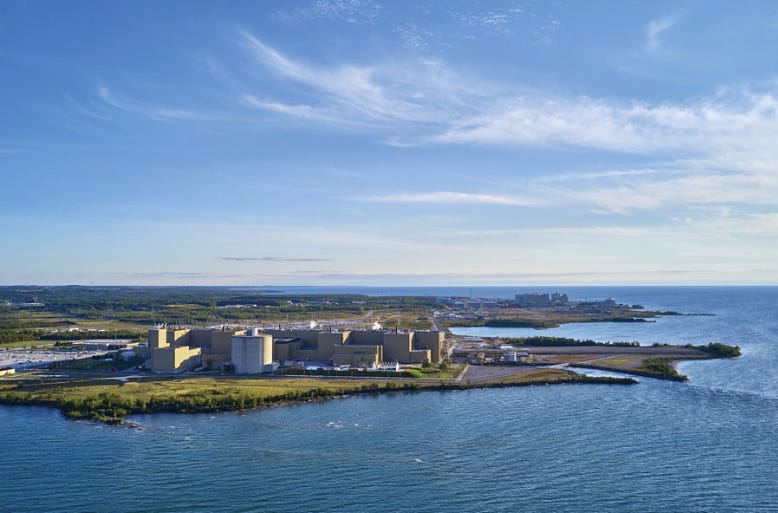
We’re good because of refurbs
Energy Minister Tim Hodgson said in his foreword to the strategy, “The successful on-time, on-budget CANDU refurbishments in Ontario — extending reactor life by at least thirty years — demonstrated that Canada’s nuclear sector is commercially competitive and technically capable.”
Not much in that statement is provably true.
Refurbishments can’t be “successful” until the reactors have had a few years to operate. Ontario “successfully” refurbished its second unit at Pickering in 1988 only to permanently shut it down 10 years later.
It is also a big swing to claim that CANDU refurbishments have extended reactor life “by at least thirty years.” Bruce and Darlington’s refurbs involved swapping tubes and replacing minor parts. Bruce had similar work completed 15-20 years into operation and is now undertaking a $18 billion refurb 20 years later, roughly consistent with technical expectations. Billions more could be needed to keep the sites operating to the 2050s.
No matter how successful the refurbs may turn out to be, it doesn’t “demonstrate” the sector is commercially competitive.
Ignoring initial construction costs, Ontario has spent and committed nearly $85 billion since the mid-80s on updates, including the Pickering refurb just underway. This expense does not include regular operating costs or the economic loss from the four Pickering units permanently shuttered halfway through their potential operating life. New Brunswick has funnelled a further $3.4 billion into refurbs at its chronically under-performing reactor. And, Quebec shut down its Gentilly unit rather than face refurb costs.
Canada’s nuclear fleet has a lifetime 75.6% capacity factor. This is lower than the current global trends, partly because we were so early to the game. Post-refurb numbers are a little better at 82.4% but it’s still a far cry from the nuclear sector’s claim of 95% efficiency.
It is questionable that spending nearly $90 billion on refurbs to keep 13 GWs of power chugging along at 75-82% capacity is commercially competitive. Obviously, Quebec didn’t think so.
It is further unclear that upkeep investments like these were factored into the Feds’ plan for 10 new reactors considering the current capital requirements for new builds. Construction costs for nuclear reactors are reaching record highs while wind, solar, and battery tech is cheaper than ever.
We have the needed skills
The Minister said of the refurb work, “That same project has produced one of the most future-ready nuclear workforces and supply chains on the planet.”
Operationally, he may have a point. Pickering’s many, many issues, Darlington’s rocky start, and Ontario Hydro’s shocking lack of maintenance at Bruce before 1999 (when Ontario Hydro was broken up), have provided Bruce Power and Ontario Power Generation lots of experience addressing challenges and getting the assets to perform. The refurb work adds to that skill base.
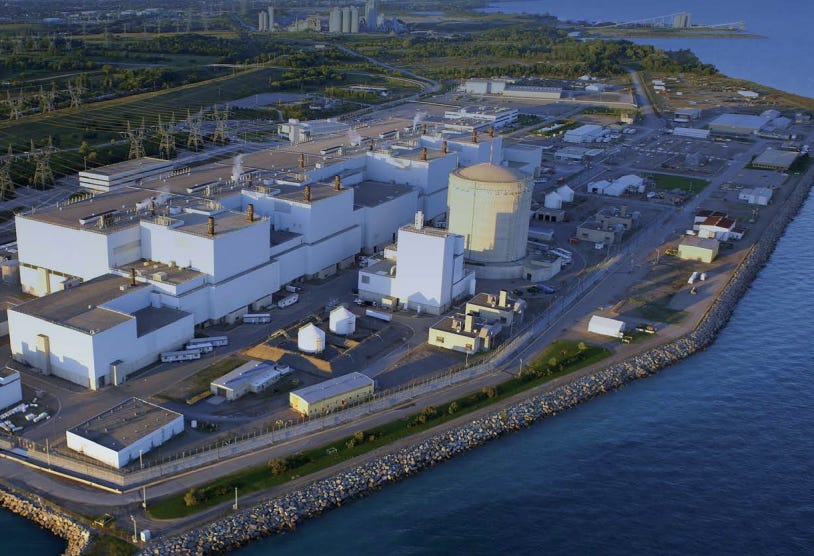
Building a reactor and operating a reactor are very different undertakings. China built 2.2 GW of new nuclear in the first five months of this year alone but Canada has not built a new reactor since Darlington’s final units entered operation in 1993. An entire career can pass in 33 years which means almost none – or possibly none – of the people who built Canada’s reactors are still working.
It took Ontario a couple decades to get proficient building nukes and even then, it had major commissioning issues with Darlington’s first units. It’s not clear what evidence the Feds have Canada is ready to pick it up again.
Upcoming projects will better test the readiness of Canada’s workforce. The $26.8 billion in work planned at Pickering reactors 5-8, where all 48 steam generation units will be replaced, is a significantly more complex refurb than those recently completed. Ontario is also preparing plant construction at its $7.7 billion SMR unit one at Darlington – Canada’s first non-CANDU-based reactor.
We are an export star
The Minister also bragged, “Canadian reactors have…been exported to multiple continents, where they continue to operate under demanding conditions.”
Canada sold 12 CANDU units over the past 50 years, including four to South Korea, two each to Romania, India and China, and one each to Pakistan and Argentina. There were 440 operable reactors in 2024. Recently, 42 countries signed a non-binding pledge to triple nuclear power production, creating opportunities, but Canada has not released a new CANDU model since the early-80s (CANDU-6).
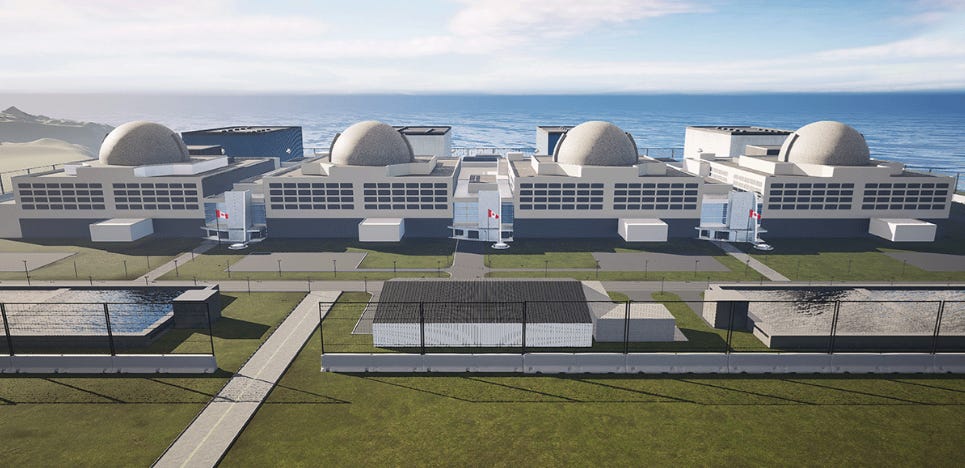
The Feds acknowledge this gaping hole in the export offering, committing in their strategy to make a “modernized” CANDU reactor available by 2030. Canada owns the intellectual property and licensing partner AtkinsRealis (formerly SNC Lavalin) recently submitted a licensing notice in the U.S for its 700 MW enhanced CANDU-6 model.
Given historical growing pains with new nuclear, the Feds will likely need to field-test the new reactor before international partners will consider it but this wasn’t mentioned in the strategy. Options could include Alberta’s first nuke in support of its data centre plans or any of Ontario’s many planned nuclear builds.