
Ontario’s nuclear plans could overbuild its electricity system
IESO’s latest forecast indicates Ontarians may pay billions for unnecessary power

The Ford government is planning billions in nuclear development based on a one-time prediction that Ontario may need 75% more energy by 2050. No need for consultations or independent analysis – Ontario needs it. So, get on board.
Electricity market administrator IESO’s (Independent Electricity System Operator) long-term outlook has thrown a big wet blanket over that assumption. In light of recent U.S. trade threats and reduced immigration, IESO slashed forecasted demand back to previous levels, making the 75% growth forecast an anomaly rather than the bankable need Ford’s government has promoted.
IESO is contracting gigawatts of competitively sourced, cheaper, non-nuclear technology to meet anticipated need, while the Ford government merrily advances more than 17 GW (gigawatts) in new nuclear power without competition or independent review. Even in IESO’s most optimistic demand outlook this year, Ford’s planned nuclear builds would push committed development beyond the province’s need.
For a Premier frustrated by a previous system overbuild, this is strange behaviour and it could cost ratepayers a ton.
How much new power does Ontario need?
Ontario will need new power to keep the lights on by 2050. This is not in doubt. The population is growing, new industrial and commercial investments are being made, and everything from home heating to transportation is on the path to electrification.
IESO’s latest long-term forecast anticipated that demand, minus savings from energy efficiency incentives, would be 65% more than power consumed in 2026. This would mean IESO needs to buy 98.6 TWhs (terawatt hours) of new electricity by 2050.
Alongside that demand growth, some power generation currently feeding the grid will get old and retire. IESO predicted that 46.8 TWhs of wind, solar, hydro and storage power will go out of service in the coming years.
So, by 2050, Ontario could need 145.4 TWhs of new electricity, according to IESO.
Explainer: A megawatt – MW – is the amount of electricity a project is capable of producing at any given moment. A megawatt hour – MWh – is the amount of electricity a project produces in an hour. This MWh production is impacted by the technology’s capacity factor (below).
Ontario’s nuclear sector claims a 95% capacity factor – nukes claim to produce 95% of the power they could theoretically provide if always operating at peak performance. Fine. Using their numbers, Ontario new power needs are set out below.
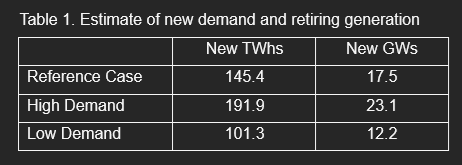
IESO estimates that Ontario needs 17.5 GWs of new power on the grid by 2050 if using nuclear technology. New power requirements may be as high as 23 GWs or as little as 12 GWs, depending on how the economy performs.
How much new power is Ontario planning to build?
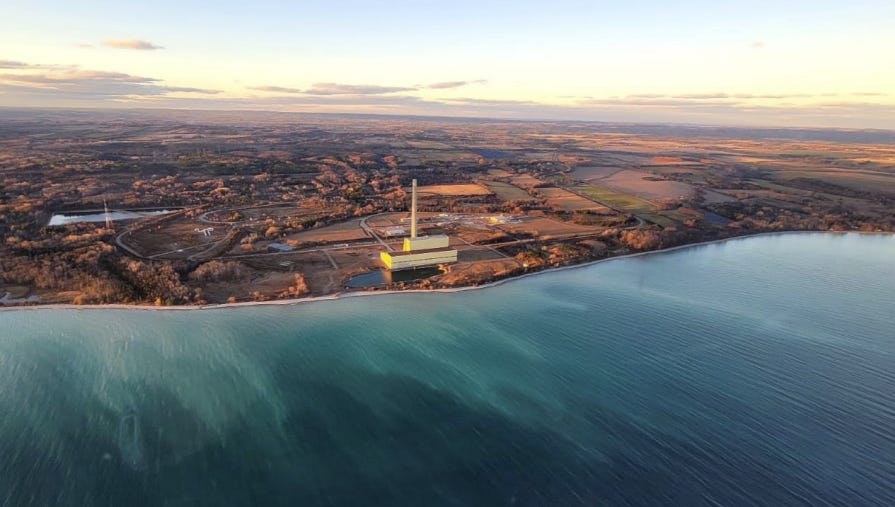
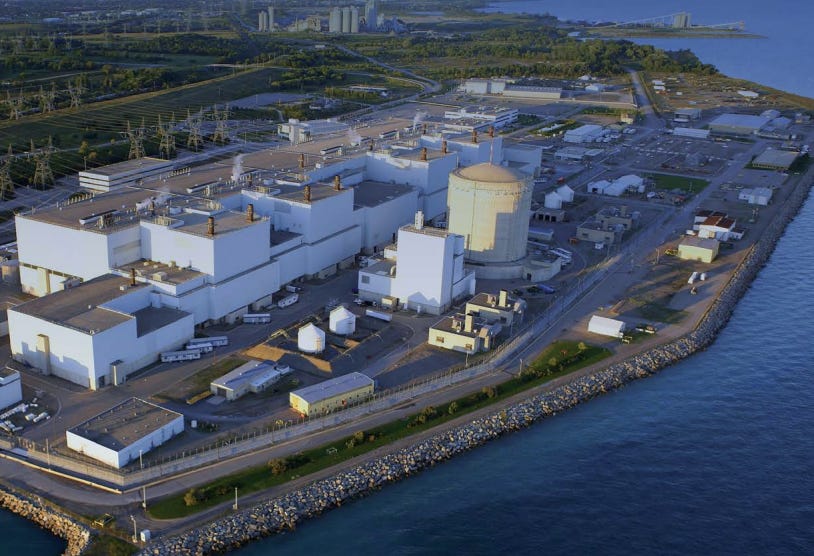
Ontario’s government is planning to build 17.2 GWs of new nuclear power in the next decade, all via non-competitive processes. This includes at least $20.9 billion for 1.2 GWs in SMRs, not yet disclosed billions more on a 10 GW nuke at Wesleyville, and 6 GW of refurbs and expansions at Bruce Power in Kincardine.
These nuclear projects would constitute a 5 GW overbuild if Ontario’s economy stalls for longer than hoped and IESO’s Low Demand scenario plays out. For comparison, the province just spent nearly $13 billion on a refurbishment of Darlington’s 3.5 GW plant that did not involve replacing generators (only fuel pipes and feeder lines), which kept costs relatively low.
The over-spending is slightly worse in the Reference Case, the most likely scenario, when including IESO’s non-nuclear procurements. IESO has already contracted or committed to buy gigawatts of new wind, solar, storage and hydro projects. A combined 23.7 GWs of committed non-nuclear and planned nuclear power projects means that even in the (hopelessly optimistic) High Demand scenario, Ontarians would pay for power they don’t need.
Using lower capacity factors, either because we can assume the nukes will underperform (I’m looking at you, SMRs) or to reflect non-nuclear tech in the supply mix, would still result in gigawatts of unnecessary development.
How much new power does Ontario really need?
This would all be problematic enough but IESO’s demand forecast is likely inflated.
Forecasting over 25 years is difficult with a lot of unknowns. But IESO anticipated one sector would add 40% of all new demand based on wildly optimistic numbers – electric vehicles.
IESO had previously predicted that Ontario would see 100% of new light-duty vehicles (LDVs) be electric by 2035 based on federal regulations. Ontario has consistently shorted EV adoption targets but IESO had faith.
PM Carney scrapped the previous government’s consumer carbon tax and indicated strict regulations on new LDV sales would be removed in favour of emissions-based incentives. The Feds instead hope 90% of LDVs sold in 2040 will be electric, dramatically reducing electricity demand. Canada does not have a credible means of achieving even that target at this time.
Climate research group Pembina found an emissions standard of 40g/mile by 2035 would be needed to meet the 90% by 2040 target. Carney has informally floated a 75g/mile standard, which met with swift opposition from the auto sector. All of this is happening in the midst of a trade war with the U.S., where the Administration’s current position is that greenhouse gases are A-OK.
Automakers are unlikely to make major design modifications for Canada’s relatively small auto market. It would be easier to pull higher-emitting cars out of the market. Fewer auto manufacturing jobs and affordable LDVs in the market won’t fly with voters, so emissions standards are unlikely to be overly restrictive.
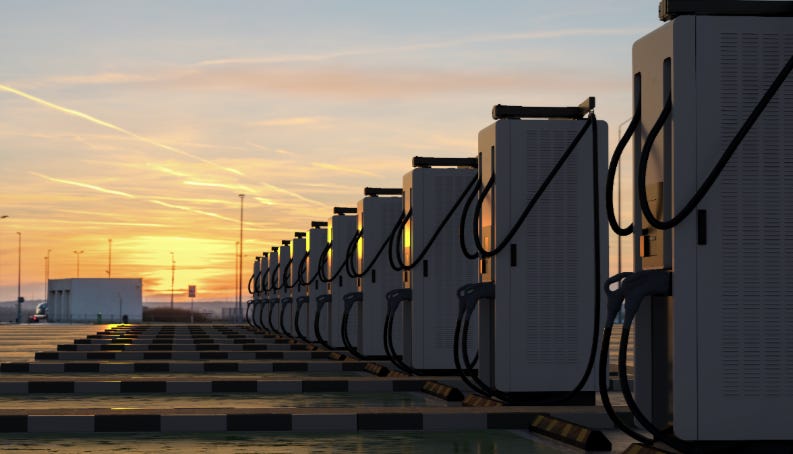
Nevertheless, IESO’s most likely case expected 100% of new LDV sales would be electric in 2043 or sooner in its High Demand case. This is not likely and, if things continue as they have been, not plausible.
IESO’s Low Demand estimate is probably out of reach for Ontario but it is more likely. Using this lower estimate, IESO’s forecasted demand increase would be 55% by 2050 – a full 20 percentage points lower than the 75% increase Ford is racing to satisfy with the new nukes.
But how much new power, really?
The situation is made starker when considering that EVs have an unusual demand profile. Time of use pricing and ultra low overnight rates can move charging activities to low demand periods, which could mean new EV demand may not require proportional new builds.
For example, Ontario’s existing nuclear plants run all the time and huge amounts of electricity go unused during off-peak periods. And, wind and hydro power are regularly curtailed (told not to produce power when capable of producing power) because of transmission constraints. Time of use incentives and addressing transmission limitations could meet some or most new EV demand by making use of otherwise lost power, further reducing the need for new nukes.
Likely IESO will further reduce its EV forecast in next year’s outlook but in the meantime Ontario will spend millions advancing nuclear power projects IESO’s forecast indicates it doesn’t need.