
Newfoundland sidesteps Churchill Falls deal, starts again
Province not going to take Hydro-Quebec’s word for it this time

Newfoundland’s December 2024 tentative agreement under which it would sell billions in hydropower to Quebec is not in the public interest, according to NL’s Churchill River Independent Review Committee (IRC), which cited non-market rates, lingering debt burdens, and limited power access as reasons the province should reopen the deal before signing.
The IRC found there were significant benefits to getting out of the 1969 Churchill Falls deal 15 years early, including $4.8 billion in additional revenue and 605 MW to enable immediate mining investments. However, it said the 2024 agreement would limit Newfoundland’s economic growth over the long-term like the much-hated original.
Newfoundland & Labrador Premier Tony Wakeman said, “If the price tag for tearing up one bad deal is being forced to sign a second bad deal, then we will be consigning our children and grandchildren to continue living under the shadow of the 1969 Agreement.”
A fate too cruel to justify any steps toward signing. Wakeman said he still wants to work with Newfoundland’s biggest and nearest customer but that he is first going to develop a position on everything from power allocation to the underlying partnership structure.
It’s a big change from the approach in 1969 where the focus was on financial gain for Newfoundland and economic gain for Quebec, which landlocks Newfoundland’s massive hydropower potential from external markets. It remains to be seen what Newfoundland’s turn toward economic benefits could mean for the deal.
Quebec needs Newfoundland
Quebec has indicated that it doesn’t want to stray too far from the proposed deal.
Hydro-Quebec released a statement on May 19th saying, “any final agreement must reflect balanced terms and deliver clear benefits to Hydro-Québec’s customers. In this respect, no agreement will be reached on terms that are less favourable than those initially agreed upon.”
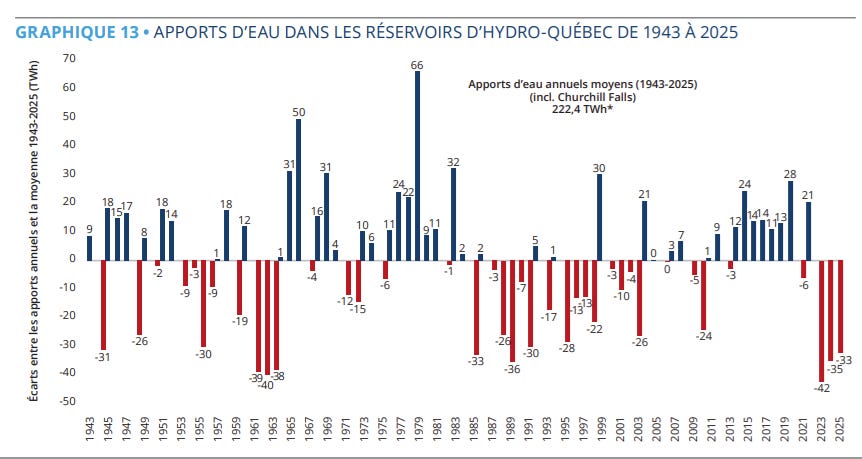
It may not have a choice. HEC Montreal’s 2026 report showed Quebec’s hydropower resources declined again in 2025. It said that water inflows were almost always above average in 2012-2022, which may have contributed to a perception of energy surplus and encouraged exports. Quebec signed massive export deals with Massachusetts and New York that it may not have the power to fulfill. Last year was the first time Quebec’s imports from New York exceeded its exports.
Quebec has said repeatedly that Churchill Falls is its best and cheapest option for power. It has agreed to pay Newfoundland and Labrador Hydro (NLH) a $3.5 billion fee under the proposed deal to share with the province a portion of those savings. Quebec would be hard pressed to replace the nearly 5 GWs of emissions-free power it currently draws from Churchill Falls by 2041 and is unlikely to do so anywhere near as inexpensively.
All this provides Newfoundland a window to carve out economic wins if it knows what it wants and moves quickly.
Newfoundland’s new demands
Wakeman appointed a three-person negotiating team to deal with Hydro-Quebec, as well as an oversight committee outside NLH to check their work. The team will establish the revised terms Newfoundland proposes but Wakeman said the revised deal will need to bolster the financial value and include more power for mining in the abundant Labrador Trough.
Value
The previous NL government had imposed a 2% price escalation and a term limit to avoid the worst sins of the 1969 deal – a bizarrely low rate over a ridiculously long time. Newfoundland collects just over $2/MWh while Quebec sells the power into the U.S. for more than $150/MWh.
These mandates handcuffed NLH’s negotiators. Under the tentative deal, the capped 50-year term would expire well before the 65-year amortization period for new project builds leaving NLH saddled with 15 years’ of unfunded debt and obligations. Similarly, to mitigate the annual price increases, Hydro-Quebec demanded near-term rates below cost.
Quebec may be willing to see these two matters addressed, perhaps by shortening the amortization period or adopting an alternative revenue guarantee. The price escalation in the tentative deal is largely pinned to Hydro-Quebec’s replacement cost, more weight could be given to external market rates, the IRC suggested, though Quebec would likely balk at such a suggestion.
More power
Newfoundland has watched its iron ore sector increase just 45% since 2007 when it was roughly the same size as Quebec’s, while the same sector just over the border boomed 125% using cheap Churchill Falls power. NL wants to make sure that doesn’t happen again.
The deal as proposed would see NLH get access to 605 MW of additional output from Churchill Falls by 2035. Some of this additional power is contingent on the Gull Island hydro project being completed, which HQ is building elsewhere on the Churchill River. After 2035, NLH would get only 500 MW in incremental power, compared to the 5,428 MW it would have access to from the existing Churchill Falls project without a deal.
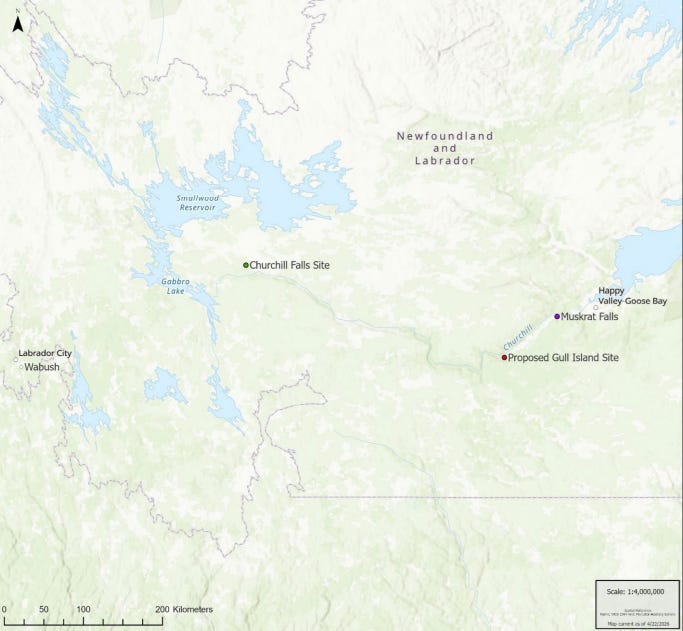
Hydro-Quebec could allow NLH additional power but it may be less likely to remove the Gull Island contingency as it may not be in a position to forego Churchill Falls power supply until it can draw from the new project. Quebec Premier Christine Frechette said on June 12th that a revised agreement could be finalized over the summer and that the two provinces were talking.
To your corners
These demands would be hard, but possible, for Quebec to stomach. Newfoundland may want to reconsider pressing its luck with its third ask.
Wakeman said “we require more transmission through Quebec so that we can retain the option to sell our allotted supply of electricity at market rates.”
On the face of it, this is a fair demand - provinces are not entitled to put up economic barriers to their landlocked neighbours. Practically speaking, Quebec is extremely protective of its sovereignty and needs the power. It would be very reluctant to reduce its power allotment from hydro projects it has and will build, only to have Newfoundland sell that foregone power over Hydro-Quebec lines to third-party markets.
Quebec is headed to a provincial election this fall. The Parti Quebecois is slightly ahead in the polls and has called the 2024 deal an embarrassment. No party hoping to win seats in October is likely to support a deal that considerably reduces Quebec’s financial or economic benefits, and NLH using HQ lines to bypass the province may be a non-starter.
Newfoundland has a better negotiating position than it did in 1969 or even 2024 and has the benefit of lessons learned over the past 50 years. The deal’s future could hinge on finding the line between protecting itself and shooting itself in the foot.