

Alberta has proposed its bring-your-own-generation process for large data centres looking to connect to its grid. It covered a lot of ground that U.S. markets have been trying to reclaim in the past couple years but has not yet included protections to avoid the worst system impacts.
Alberta proposal would allow data centres requiring more than 75 MW of power to bring their own power and would enable partial load interconnection while the new generation is built. The process is currently under public consultation with market administrator Alberta Electricity System Operator (AESO) set to finalize rules in the coming months.
Alberta has over 20 GWs of data centre interconnection requests awaiting a final interconnection process and the government has pinned its economic plan to a target $100 billion in AI investment. It wants this process to work but must protect its relatively small system from rate hikes and reliability hits.
Canada’s other provinces are lagging behind on data centre interconnection rules, ranging from near disengagement on the topic in B.C. to the launch of pointless info sharing processes for speculative development in Ontario. Alberta could set the standard for Canadian development if it gets the details right.

Canada’s land is bigger but our markets are smaller
Virginia is the epicentre of data centre development in the U.S. with 4.9 GWs in operation and another 1 GW in development in the state’s north at the start of this year. Local utility Dominion has planned 27 GW in new power (mostly nuclear and renewables) by 2039 and in 2025 said it would increase rates at least US$10/month by the end of 2027 alone to accommodate the new load.
Even if it can build what it needs to for the price it anticipates, reliability has been impacted. In 2024, a voltage fluctuation caused 60 data centres to simultaneously disconnect. If Dominion and market administrator PJM had not quickly curtailed supply, it could have caused sweeping blackouts across northern Virginia.
Alberta’s entire electricity capacity is about 23.3 GWs today, less than Dominion’s planned new build. Its operating capabilities, ability to compensate for finicky major loads, and 1.6 million household ratepayer base are not inherently suited to data centres. It will need to get its rules right.
What Alberta is doing well
The U.S. Federal Electricity Regulatory Commission (FERC) directed six markets to shore up interconnection rules for data centres last month. Alberta appears to be well on its way to addressing some of these areas.
AESO’s process includes a framework to evaluate generation projects that would either be collocated or “tethered” which means they’d be built at the same time as the data centre but located elsewhere on the grid. It includes a three-year bridging option similar to Southwest Power Pool’s framework that could allow data centres to power up a portion of their load before the new generation is complete. AESO limited generation that can be located separately from the data centre and empowered itself to curtail data centres’ power draw during the bridging phase.
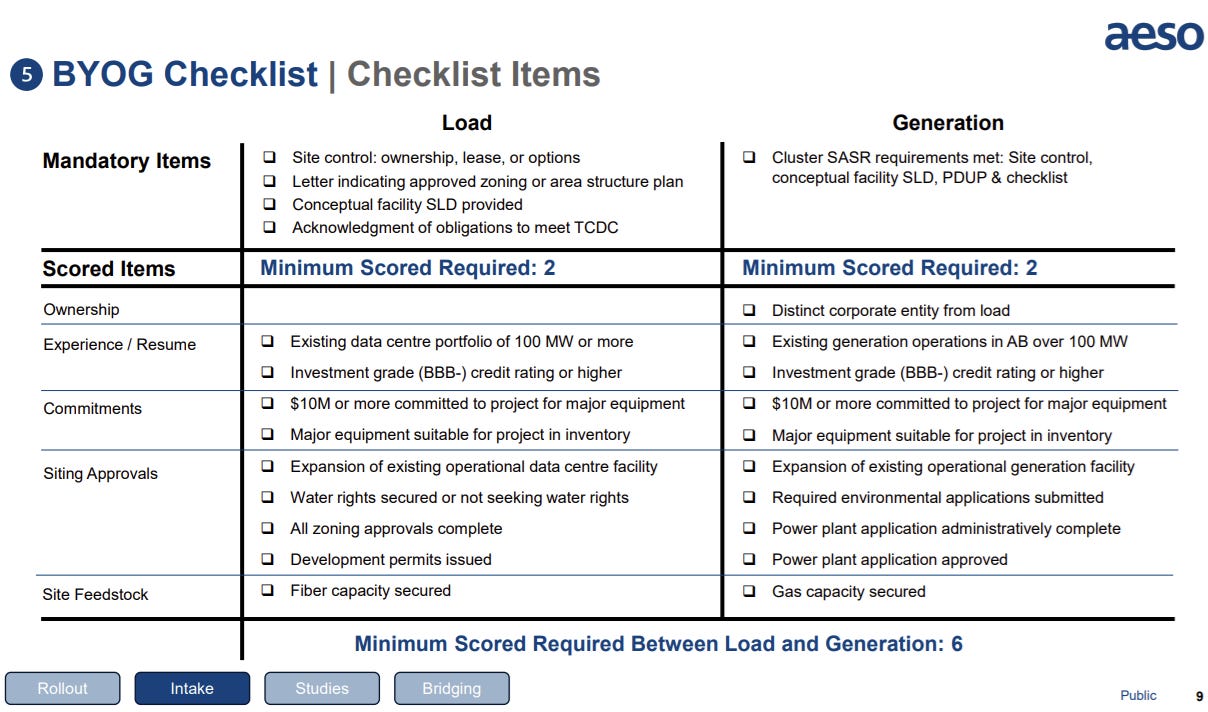
Alberta also set a $15,000/MW fee that would be forfeited by any data centre developer leaving the process after agreeing to an interconnection study. Required early enough in the process, this could help limit speculative bids that big tech firms submit without a firm intent to build. Speculative applications have led to system overbuilds and unnecessary procurements in the massive eastern-U.S. market, PJM, which has contributed to significant rate increases.
AESO would use a cluster study application process to coordinate new transmission builds with clear off-ramps for generation and load separately, each responsible for their determined interconnection costs.
Room for improvement
Alberta’s penalty is appropriate early in the interconnection process, prior to any actual studies, but the province lacks a second, more aggressive penalty once the interconnection study has begun. Its $15,000/MW fee for a 200 MW project would be just $3 million – Canadian – which is pocket change for the big tech firms Alberta is hoping to attract.
In addition to speculative bids, PJM has seen data centres submit duplicate applications and then leave ratepayers with the capacity bill for versions of the project ultimately abandoned. An escalating fee at later stages in Alberta could help deter exits. The province could also adopt PJM’s new requirement that data centre applicants disclose upfront if any applications in the cluster study are duplicative or related.
Alberta could also learn from Texas where regulators worried that data centres building collocated generation not connected to the grid would limit market administrator Electric Reliability Council of Texas’ (ERCOT) ability to manage emergencies. Texas provided ERCOT the right to curtail data centres’ power draw, forcing them to either reduce power consumption or to draw only from their collocated power supply, under certain circumstances. AESO has proposed that it would have this right during the bridging period but an ongoing right under limited circumstances could help it weather reliability emergencies.
Catching up with reality
FERC also directed its markets to provide interconnection opportunities for data centres willing to reduce power consumption upon demand, which could be particularly attractive in Alberta.
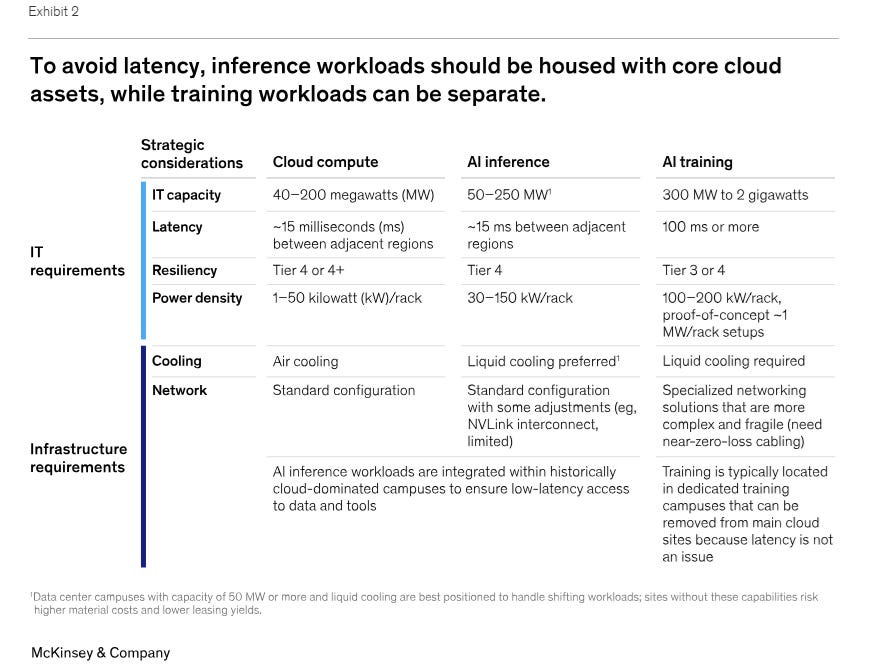
Virginia is a popular location because of its proximity to major fibre networks and user centres necessary for AI inference work. Apart from Edmonton and Calgary, Alberta is relatively remote but it is also cold and open, perfect for hyperscaler centres focused on training. These centres may be able to reduce power demand more regularly, easing impacts on the grid.
Alberta also needs to take steps quickly on allowing renewable energy and batteries or other long-duration storage technologies to qualify. AESO’s proposal would allow data centres to bring only new natural gas-based generation. It said that future “BYOG rounds may consider other technologies that can demonstrate they can maintain the reliability and adequacy of the grid” but provided no clarity on what evidence may persuade it. Multiple jurisdictions are already relying heavily on renewables bolstered by power storage and voltage services.
Gas is subject to market swings and spews carbon emissions, so not allowing alternatives could be a deterrent. The province recently published regulations that would also allow generation or storage currently not selling all its power to apply to for BYOG eligibility, which would further enable emissions-free power matching.
Making headway on nuclear plans and resolving its inter-provincial transmission qualms to make the most of BC’s hydro power could also help Alberta on its way.