
Canada an unmatched nuclear competitor?
Success is possible if the country can find its place in the global market

The Federal Government has adopted nuclear goals that would cost tens of billions in taxpayer-funded investments. It justified its nuclear strategy touting Canada’s experience in the sector, which Powering Canada examined last week.
It also claimed Canada is positioned to compete because it “holds structural advantages across the full nuclear value chain — from uranium mining through reactor technology to export track record — that virtually no other country can match.”
No, we don’t. Canada has a lot going for us but there’s nothing to be gained by exaggerating where we stand.
Canada has some noticeable gaps in our supply chain. And, despite being near the top in many areas – second largest uranium miner, seventh largest nuclear generator, and owner of a major reactor technology – in no category are we matchless.
If Canada dives into competition with a clear-eyed understanding of our strengths, weaknesses, and position in the global marketplace, we could be successful. After all, 42 countries have pledged to triple nuclear power generation, opportunities abound. Failing to understand where we’re at a competitive disadvantage could see Canada miss out on opportunities best suited to our capabilities.
Mining is good for us
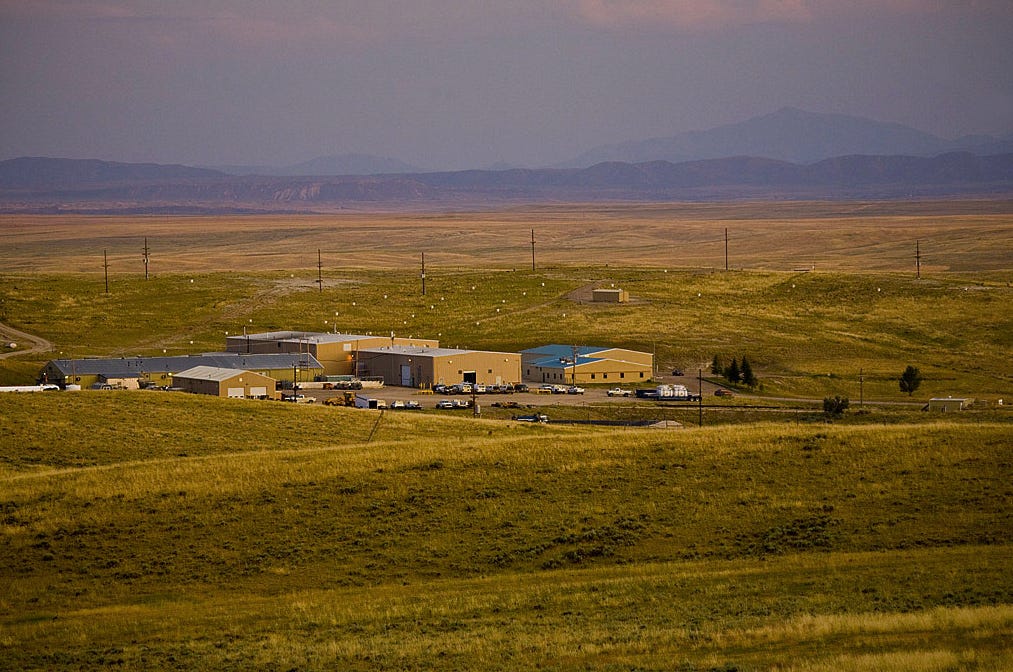
Canada is the second largest uranium miner on earth, behind only Kazakhstan. We have 10% of the world’s inferred uranium reserves and Saskatchewan-based Cameco, responsible for most of our output, is an experienced miner.
We hold an advantage but it’s not structural; it’s a quirk of Australia’s environmentalism. The land down under holds nearly three times Canada’s inferred uranium resources and lags in production only because local prohibitions on uranium mining have limited activity in some of its most bountiful regions.
Australia is a mining giant. Should they remove their restrictions and start mining uranium, they will do it well and they will do it big, rapidly.
Enrichment could prolong advantages
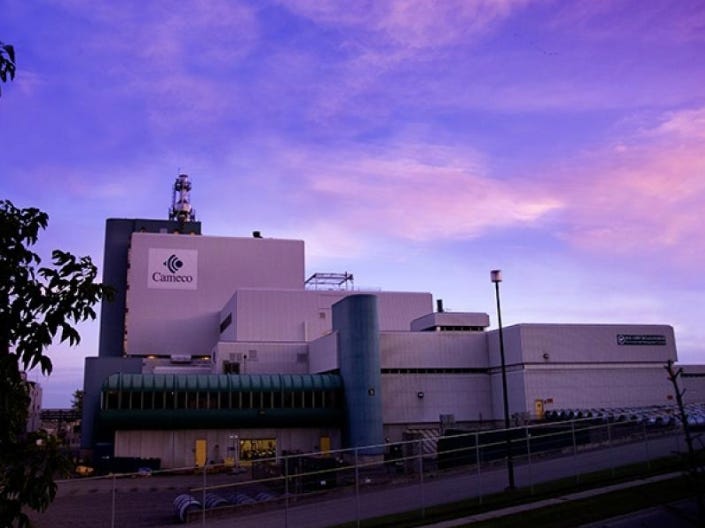
Canada, via Cameco, also reliably converts mined uranium into yellowcake in Saskatchewan and into uranium hexafluoride (for light-water reactors) and uranium dioxide (for heavy-water reactors) in Ontario. These capabilities extend the global value of Canada’s mining sector but stop short of our potential.
Canada doesn’t enrich uranium. China, Russia, the U.S., U.K., France, Germany and the Netherlands do, despite only the superpowers among them holding uranium reserves. The Netherlands and Germany have virtually no nuclear tech to fuel and no domestic supply to enrich.
Uranium mining is straightforward and market prices are low, relative to other minerals. Canada is doing the grunt work and shipping the most valuable part of the supply chain outside the country. This is a competitive gap the Feds could address to make Canada a uranium supplier of choice.
National security interests
If not for the economy’s sake, then maybe the Feds could consider enrichment for the security of our own nuclear fleet.
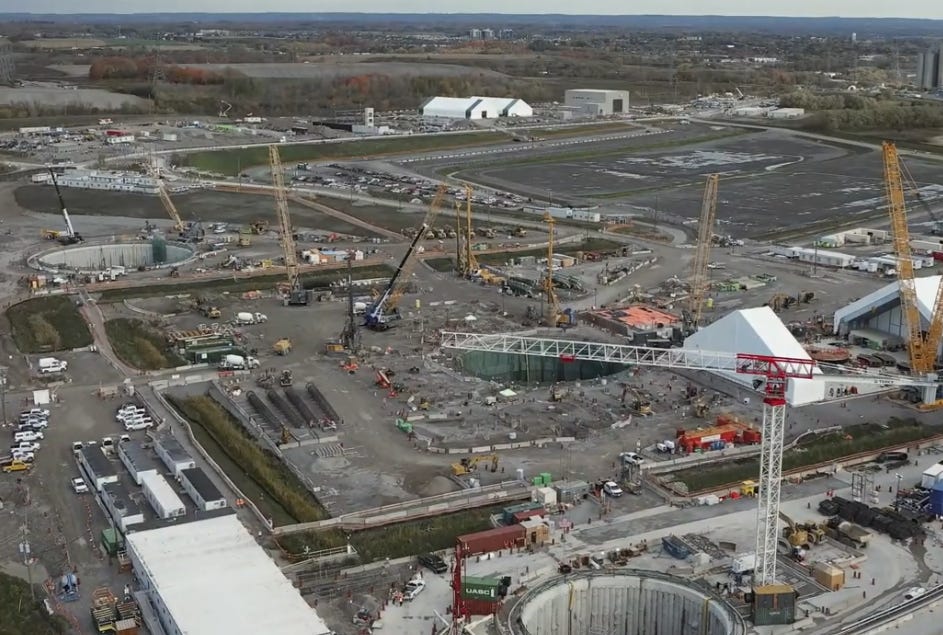
Ontario is planning a 4.8 GW expansion at Bruce, a potentially 10 GW new project at Wesleyville, and is starting construction at its $7.1 billion small module reactor (SMR) at Darlington. The SMR uses GE-Hitachi light-water reactors, which will force Ontario to develop related expertise. It may become more willing to adopt large light-water reactors for its other projects, rather than wait on CANDU which is still years away from releasing its modern reactor.
The Feds said in their strategy, “The longer-term question of whether Canada should develop domestic enrichment capability remains under assessment. The case would strengthen if the domestic non-CANDU fleet expands considerably, but in the meantime, forming deliberate partnerships with trusted allies – with Canada as the top supplier of uranium – will ensure our fuel security.”
Great plan. Let Canada get good and dependent on enriched uranium and then consider onshoring production. Until then, Ontario can hinge its electricity system on such rock steady “trusted allies” as the United States.
20 years behind on CANDU
Canada has no experience with light-water reactors or enriching and handling the fuel they use. It is a major weakness given the direction of our domestic fleet. Rather than confront this looming challenge in the strategy, the Feds focus on the dream of CANDU’s next reactor, which they pledge to release by 2030.
The technology has done right by Canada. CANDU reactors enable middle powers to sidestep the superpowers’ stranglehold on enriched uranium (though, Canada enriching uranium would do the same). The Canadian people own the IP and Quebec-based AtkinsRealis (SNC Lavalin) is the only licensee, keeping profits and jobs at home. We have sold 12 reactors abroad and have been a good operating partner.
CANDU technology is also our only reactor offering. Canadian-owned Brookfield and Cameco own Westinghouse, whose tech underpins half of all nuclear reactors in the world. But, Westinghouse designs, manufactures, and tests its equipment in Pennsylvania. It is an American company and always has been.
So, all aboard the CANDU express, right? Sure, but we need to make up a couple decades of development, fast.
Westinghouse’s AP1000 and Framatome’s (old Areva) EPR reactors have already weathered some growing pains. Westinghouse’s $36 billion Vogtle project in Georgia was three times the original budget and Framatome’s Flamanville project in Normandy was 13 years late and four times its original budget. Both projects are operating and Framatome and Westinghouse can argue future installations would be smoother, CANDU doesn’t yet have a model to sell.
This isn’t to say the Feds should ditch CANDU but light-water reactors will play a major role domestically and internationally. Canada should prepare to compete in that market with more than just blind faith in CANDU.
Waste management is a tie – nobody wins
Canada has a strong record of safe storage of nuclear waste and has a lot to offer countries building their first nukes in establishing safe controls and practices. So do France, the U.S., Japan, and South Korea – it’s not a big competitive advantage.
The sad truth is that no one has any experience with disposal of high-level waste. Finland and Sweden are building capacity but neither facility is operational yet. Canada has selected a disposal site but is years away from completing construction.
Our competitive advantages could be firmed up with the right investments, and any weaknesses could be addressed or planned for, but only if Canada doesn’t pretend that what we’ve been doing is enough.