
Alberta-Canada carbon deal not the lemon it seems
Headline worthy “gets” were ruthlessly sacrificed for pragmatic progress

The Canada-Alberta carbon pricing agreement isn’t the approach anyone wanted but it’s better than anyone had reason to hope for, no matter the political leaning.
Prime Minister Mark Carney and Premier Danielle Smith published details of their carbon pricing deal on the Friday before the May long weekend. It could be they wanted it public as soon as possible or it may be that they buried the news because they knew everyone would immediately fetch their swooning fans.
Climate Action Network Canada’s Executive Director Caroline Brouillette said, “With today’s announcement, Prime Minister Carney is taking a sledgehammer to one of the last remaining pillars of Canada’s climate plan.”
Environmental Defense said in a release, “This agreement is capitulation dressed up as a compromise.”
And, Former Environment Minister Steven Guilbeault (Liberal) resigned from Parliament, citing the deal as a final straw in a decision he said was the result of careful consideration.
Meanwhile in Alberta, Oil Sands Alliance President Kendall Dilling said, “An industrial carbon tax only adds uncompetitive costs to industry on top of the costs of a carbon capture project.” The alliance complained that “no other major oil producing nation faces a similar tax.”
Senior Fellow Kenneth Green at policy thinktank Fraser Institute said, “And, the future of Alberta’s energy economy has its new straightjacket; its new payment plans for Canada’s climate; new wide-ranging non oil-and-gas electrification policies; and some slightly stronger promises that someday Alberta will be allowed to expand its oil production for export to Asia by a million barrels per day.”
The pro-separatist movement remained opposed to any federal carbon pricing and was unconvinced by conditional promises to support a new pipeline through British Columbia.
A deal this universally unpopular is typically a decent compromise or a complete mess. There are many – so very many – details still to be finalized and it could easily become a mess. For now, it is set to be a brutal compromise.
Price of carbon
The implementation agreement answered some big questions posed by the MOU Alberta and Canada signed late-last year.
The biggest was how quickly to escalate the price of emitting one tonne of carbon. Alberta has consistently fought the Feds’ right to impose any cost and has been doing its level-best to undermine the market price. Canada has been battling to meet climate goals reasonably consistent with those of key trading partners, including the European Union.
The result? The Feds slashed their intended regulated carbon price from $170/tonne in 2030 to just $115/tonne in 2030. It made this change across Canada.
This is a dramatic change and it’s understandable that those wishing to have breathable air in 2050 would be concerned as Canada’s climate commitments weren’t exactly world-leading before. However, it’s fair to say that the regulated rate was notional, at best, in Alberta. The market price of carbon – the actual price paid – was as low as $17/tonne in 2025 when the regulated rate was $95/tonne. It’s the market price that sways investment decisions and reduces emissions.
Market price of carbon
The Feds seem to have understood this dynamic. Alberta committed to a $60/tonne price floor for any carbon credits issued in 2030 or later and that it would increase the floor to $110/tonne in 2040.
There is no guarantee that the market rate will be anywhere near the price floor. Older credits will be grandfathered in at much lower rates and will likely be retired in years of higher-price floors. Alberta is also keeping modified provisions that enable credit generation for mere investment, whether or not emissions are actually reduced, and the related reactivation of retired credits.
At the same time, Alberta was able to slash in half stringency rates (the rate at which emissions reduction requirements increase). This will depress demand for carbon credits, expanding the pot of surplus credits to be grandfathered into the new price floor era.
Cherry on top? Most credit purchase deals are confidential and it is unclear how Alberta or the Feds intend to enforce the price floor.
The Feds appear to have planned for this as well. Alberta committed to “administer and design TIER such that the Effective Price of credits in the TIER market will adjust over time and will target $130 in 2040.”
The word “target” is doing a lot of heavy lifting in that pledge but the intent appears to be that Alberta will further modify its carbon pricing framework if the price floor isn’t getting the job done. Simply undoing some of its previous price-weakening measures would drive up demand for credits.
Alberta’s energy (oil and gas) sector
In addition to the lower regulated carbon price, Alberta received several energy sector cash injections under the deal.
Generally overlooked, in the discussion of big carbon capture and storage (CCS) and pipeline projects, were an extension to CCS tax credits and new tax credits for high-voltage intra-provincial transmission lines. These are badly needed to help fund CCS and power development, as well as to connect major loads in extraction industries, housing, and in support of Alberta’s data centre plans.
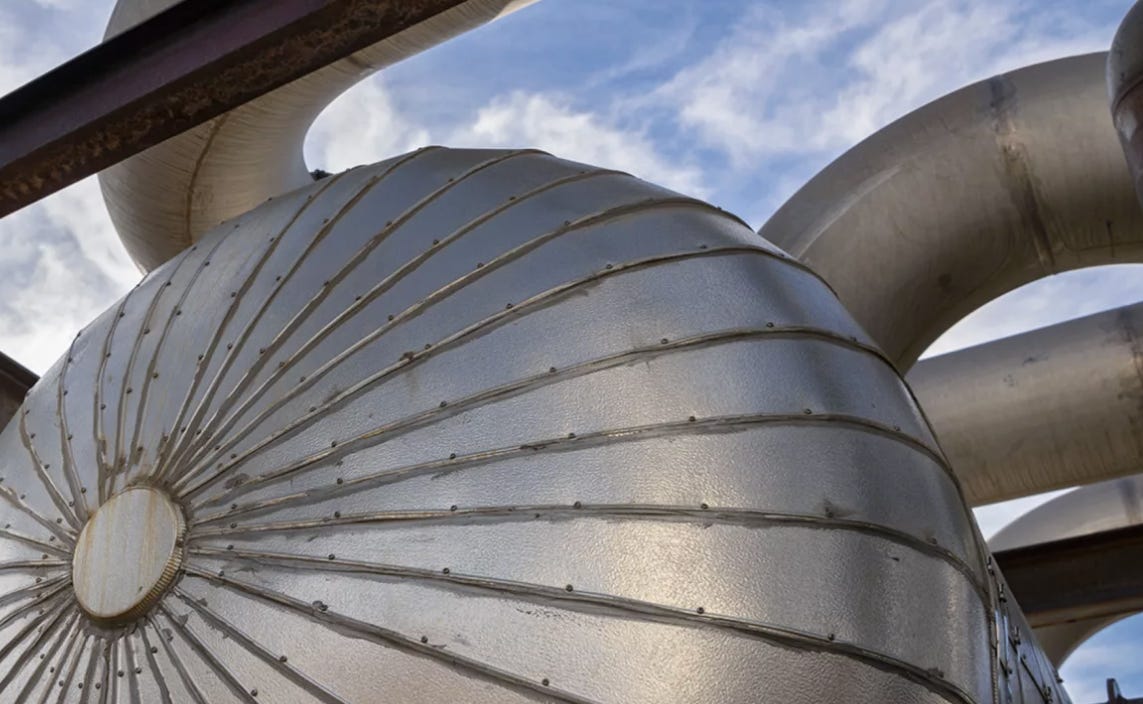
The Feds confirmed support for the Pathways CCS project with major oil sands producers and its plan to list a new pipeline through B.C. under its Major Projects Office, which could mean expedited approvals and further funding.
Alberta and the Feds each committed $600 million toward a Contract for Difference (CfD) framework with effective prices reaching $130/tonne in 2040. The $1.2 billion fund would top up carbon credit compensation to an agreed-upon price where the market price falls short, and would survive a collapse of the broader deal.
The CfD fund is not as flashy as a headline carbon price but it would provide certainty for major emission reduction projects that might not otherwise happen. In the face of the CfD, the Pathways and pipeline support, and the new tax credits, energy sector complaints about a predictable carbon price wear thin.
Confidence in Alberta
Nearly all the important details are still to be ironed out, leaving plenty of room for the deal to collapse but it’s a reasonable start, painful though compromise may be on all sides.
A big question is whether Alberta can move past its separatism own-goal. Relentless independence campaigns did no favours for Quebec’s economy in the 20th century. Alberta seems determined not to learn from the example and could stymie its growth otherwise enabled by this hard-fought agreement.