
Maritimes could save millions if it works together
First, New Brunswick needs to sort itself out

Nova Scotia, New Brunswick, and Prince Edward Island agreed last week to evaluate integration of their three electricity systems in hopes of saving big on transmission, energy efficiency and new power generation. Done well, it could mean millions in economic gains.
New Brunswick considers itself the natural hub with transmission links to the U.S., Quebec and both of its Maritime partners. Provincially-owned NB Power already acts as system operator for inter-provincial transfers in the area and could expand its role. There is just one problem – NB Power is a mess.
The utility has nearly $6 billion in debt and is over-leveraged, at 93% debt-financed, compared to private sector peers. NB Power is facing billions more in near-term gas, hydro, and nuclear capital projects and appears to be marching toward increasing financial instability.
The provincial government is working to address some of challenges but is reluctant to tackle NB Power’s debt. This could make trusting New Brunswick to lead regional integration a hard sell for Nova Scotia, which has recently taken steps to better organize its own electricity market and needs a stable investment environment for its wind energy plans.
Maritimes’ best future
The memorandum of understanding (MOU) signed last week could see coordinated electricity system planning, a regional balancing authority (responsible for balancing supply and demand to maintain grid frequency at 60 Hertz), and a Maritimes-wide independent electricity system operator (IESO).
This idea is long past due. The three provinces combined consume barely more electricity than Manitoba. Cost savings on planning and system operations alone would be significant, not to mention more efficient investment in power projects. Improved coordination on transmission could also help Nova Scotia better market its planned wind power.
Regional coordination is a well-tested model. The States are mostly sorted into regional systems, and the western U.S. has been working for years to establish one of its own. Establishing a robust Regional Transmission Operator there is estimated to be worth roughly $80 billion in economic gains. The E.U. operates along the same lines.
Provincial ownership of most of Canada’s electricity systems has kept the markets strictly divided but it doesn’t have to be that way. New Brunswick’s March 2026 report on its power sector recommended a move toward regional coordination and the province has long dreamed of managing the Maritimes’ system.
Reality bites
New Brunswick’s March 2026 report also noted, “NB Power’s revenue, constrained by rate decisions since 2011, has not grown enough to keep pace with rising capital costs, contributing to the persistent debt pressures the utility faces today.”
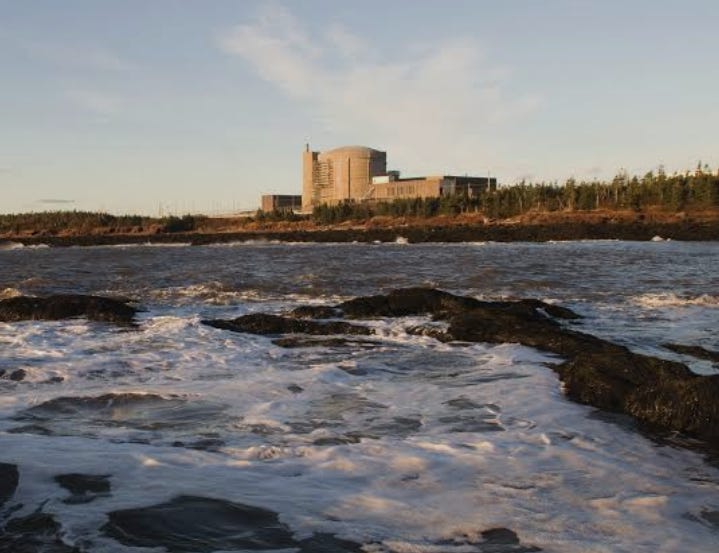
Rising capital costs, indeed. NB Power has spent more than $2.3 billion just to get its Point Lepreau Nuclear reactor to perform as promised. The asset has struggled along at just 61% capacity factor in recent years, costing hundreds of millions in lost revenue, and prompting NB Power to allocate this year another $88 million on outside expertise.
NB Power is facing more than $11 billion in near-term capital costs. It is set to undertake refurb work at its Mactaquac hydro station, for which costs have doubled to $7.2 billion. It is developing a $3.6 billion natural gas plant to be built in step with the Wasoqonatl line, which cost it is also sharing with Nova Scotia. And, New Brunswick will soon need a second nuclear reactor, or alternative, which would cost billions more.
It is unclear how NB Power will finance all of this. The utility has already opted for an undesirable partnership approach for its gas power project citing “internal resource limitations and competing capital projects” as key considerations. The NB Auditor General said in its June report that the approach added $700 million to upfront costs and exposed the province to long-term financial and contractual risks.
Some issues could be fixed if the province is willing to make tough choices. New Brunswick’s independent March 2026 report recommended partially privatizing NB Power, writing down certain debt, and moving $1.5 billion to the government’s books.
The government noncommittally accepted 44 of 50 recommendations, including one broadly aimed at political interference with rate setting. When it came to recommendations on addressing the debt load, the government wouldn’t even half-heartedly accept proposed changes, saying they “required further analysis” and providing a December 2029 target for whatever that might entail.
Dubious pitch for regional management
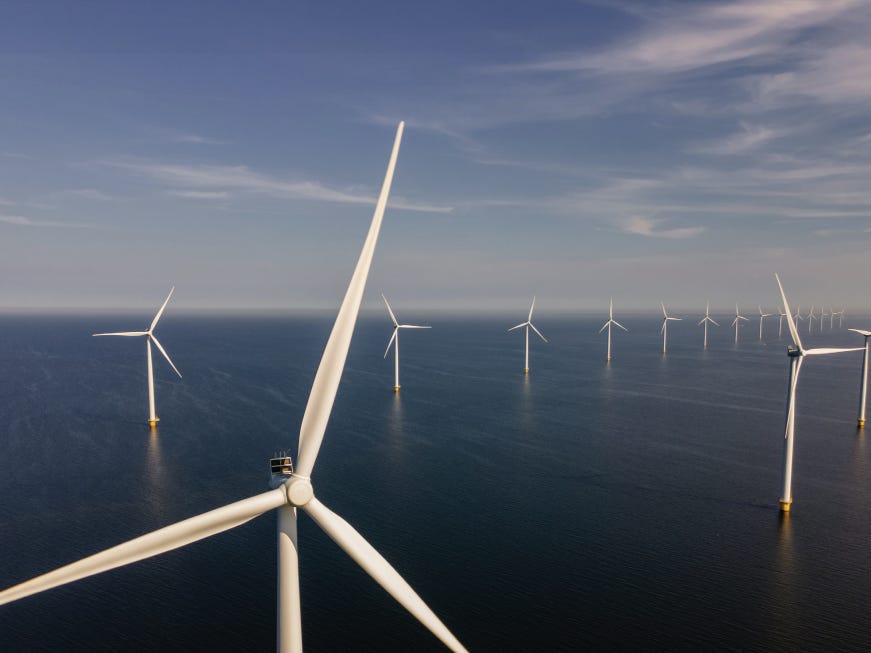
Nova Scotia’s electricity system is nearly as big as its neighbour’s, though cut off from North American markets by New Brunswick and the Atlantic Ocean. It has big plans for its electricity sector. Last year, Nova Scotia established its own IESO to manage resource planning and system operations. It has also been working with the Feds’ Major Projects Office on its Wind West plan to build 5 GWs of offshore wind and scale up to tens of gigawatts eventually.
Nova Scotia is under no illusion that its easiest access to North America is through New Brunswick. NB Power has a 350 MW intertie with Nova Scotia that will double in capacity by 2029 via the $685 million Wasoqonatl reinforcement line, 1.2 GWs in transfer capacity with Quebec, and 1 GW in ties to the U.S.
Nova Scotia is also painfully aware of NB Power’s debt troubles. Nova Scotia fought to maintain open access to New Brunswick’s grid when NB Power considered a Hydro-Quebec $4.7 billion takeover attempt in 2009. Hydro-Quebec would have gained direct access to New Hampshire and Maine and NB Power’s debt would have been wiped clean.
The deal fell through but prompted an SNC Lavalin report that recommended Nova Scotia establish its own IESO rather than join a regional operator with New Brunswick. The 2009 report argued that Nova Scotia would better support competition and serve provincial interests by staying out from under New Brunswick. Nothing about New Brunswick’s system has changed for the better since that report.